
Have you ever held yourself back from trying something new because you didn't feel confident enough?
Perhaps it's speaking up in a meeting, joining a new exercise class, learning a new skill or stepping outside your comfort zone. We often assume that confidence is something we need before we take action. We tell ourselves that once we feel more capable, more prepared or less nervous, we'll finally give it a go.
But what if confidence doesn't come before action? What if it grows because we take action?
Confidence isn't about always knowing the answers, getting everything right or never experiencing self-doubt. It's about developing trust in yourself and your ability to learn, adapt and handle new experiences.
So, how can you build confidence in yourself? Three simple principles can help: competence, repetition and reflection. By learning new skills, taking small, consistent actions and recognising your progress, you can gradually build confidence in your everyday life.
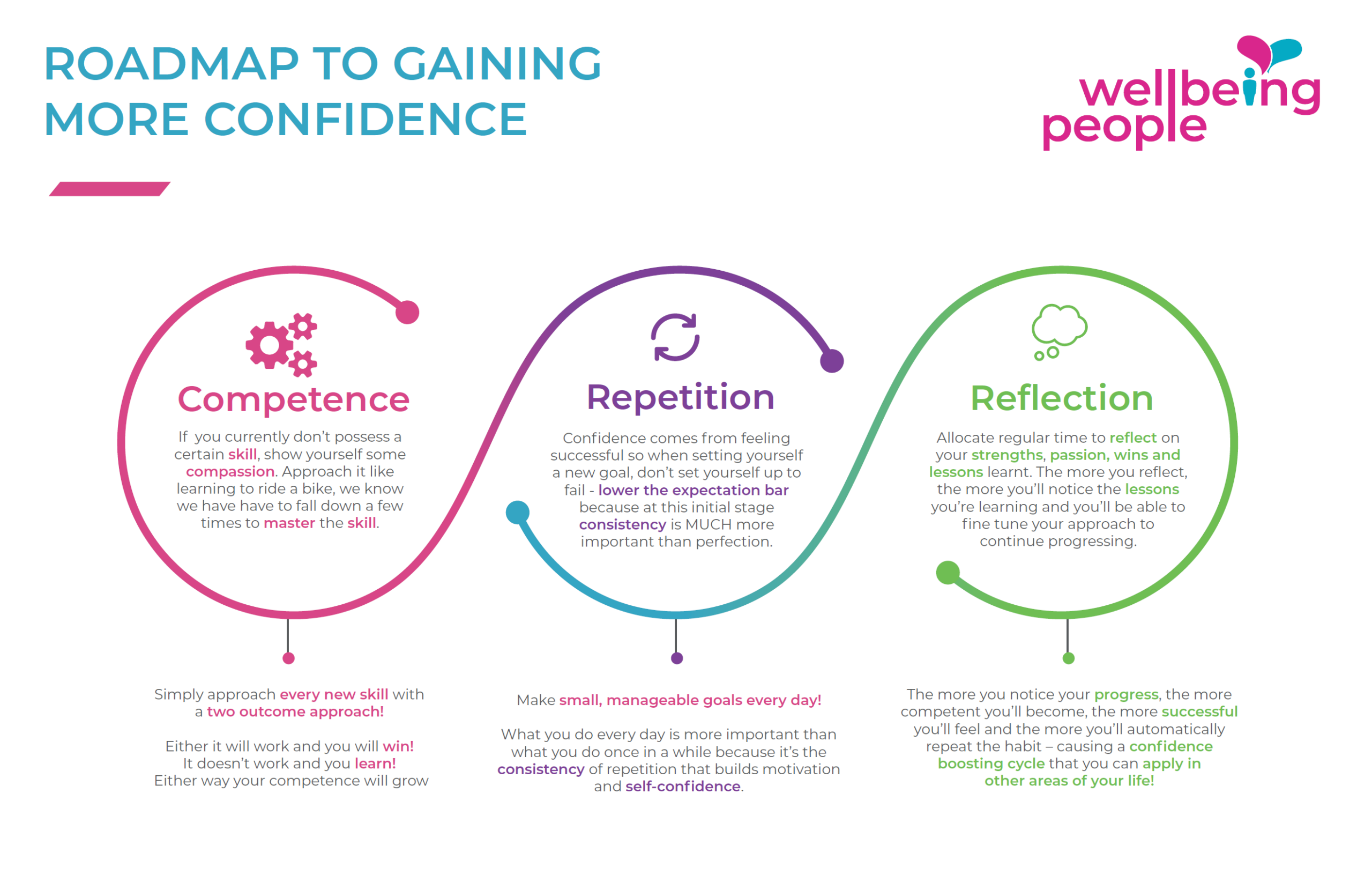
1. Competence: Give Yourself Permission to Learn
Think back to when you first learned to ride a bike. You probably wobbled, lost your balance and perhaps fell off a few times before you got the hang of it. At no point did you expect to be brilliant straight away. You understood that learning something new would take time and practice.
Yet, as adults, we often forget to give ourselves that same patience. Whether it's starting a new job, taking up a hobby or speaking in front of others, we can put enormous pressure on ourselves to get things right from the beginning.
But being a beginner doesn't mean you're not capable. It simply means you're learning.
Developing competence means building the knowledge, experience and skills that help us feel more capable. And every time we learn something new, we create an opportunity to strengthen our confidence.
In fact, the NHS highlights learning new skills as one of five ways to support mental wellbeing, including improving self-confidence and self-esteem. The key is to approach new experiences with curiosity rather than judgement.
Instead of thinking, 'What if I'm not good at this?', try asking yourself, 'What could I learn from giving this a go?'
Remember, you don't have to be good at something to begin. You begin so you can get better.

2. Repetition: Build Confidence Through Small, Consistent Actions
Have you ever noticed how something that once felt uncomfortable gradually becomes easier with practice?
Perhaps the first time you drove a car, everything required your full attention. Now, many of those actions probably feel much more natural. That's the power of repetition. The more opportunities we give ourselves to practise a skill or navigate a situation, the more familiar it can become.
Psychologist Albert Bandura explored this through the concept of self-efficacy, which describes our belief in our ability to carry out particular tasks. Research into self-efficacy suggests that experiences of successfully navigating challenges can play an important role in strengthening that belief.
But here's where we can sometimes make things unnecessarily difficult for ourselves. When we want to improve our confidence, it's tempting to set ambitious goals and expect immediate results. If we don't achieve them, we can quickly become discouraged.
Instead of focusing on doing something perfectly, focus on making it manageable enough to keep practising.
For example, if you'd like to become more confident speaking in meetings, you don't need to volunteer to lead the next company presentation. Start by sharing one idea, asking a question or contributing to a conversation.
If you want to feel more confident exercising, begin with an activity you enjoy at a level that feels comfortable, rather than comparing yourself with someone who's been doing it for years.
Each experience gives you an opportunity to learn, adjust and gradually become more comfortable. At Wellbeing People, we believe in the power of the 1% philosophy: finding just 10 minutes in your waking day to make one positive change.
The same principle can apply to building confidence. Small actions, practised consistently, can help us develop skills and gradually strengthen our belief in ourselves.
3. Reflection: Recognise How Far You've Come
When was the last time you stopped to acknowledge something you've done well?
We're often quick to notice our mistakes, compare ourselves with others or think about everything we still need to achieve. But how often do we recognise the progress we're already making?
Reflection is an important part of building confidence because it helps us recognise our strengths, learn from experiences and notice improvements that might otherwise go unnoticed.
Imagine you've been working towards feeling more confident in social situations. A few months ago, you might have avoided attending an event where you didn't know anyone. Today, perhaps you went along, started a conversation and stayed for an hour. You might still have felt nervous, but that doesn't mean you haven't made progress.
Confidence isn't always about feeling completely comfortable. Sometimes, it's about recognising that you've done something you once thought you couldn't.
Taking a little time to reflect can help you develop a more balanced view of your abilities.
Try asking yourself three simple questions:
Not every experience will turn out the way you hoped, and that's OK. Reflection isn't about finding a positive in everything or ignoring difficult feelings. It's about giving yourself the opportunity to learn without allowing one setback to define your abilities.
You may be surprised by how much you've already achieved when you take the time to look back.
Over time, these reflections can become a useful reminder of your strengths, capabilities and personal growth.

Confidence Grows One Step at a Time
Building confidence isn't about transforming yourself overnight or becoming someone who never experiences uncertainty. It's about being willing to learn, giving yourself opportunities to practise and taking the time to recognise your progress.
Some days you'll feel capable and ready to take on a challenge. Other days, self-doubt might creep in. Both are part of being human. What matters is remembering that confidence can grow through experience, and you don't need to have everything figured out before you begin. So, this week, think about one thing you'd love to feel more confident doing.
What's one small step you could take towards it today?
Sometimes, the first step toward feeling more confident is simply giving yourself permission to try.