Employee engagement has become one of the most talked-about challenges for UK organisations. In a competitive labour market, with rising sickness absence and pressure on budgets, HR teams are being asked to do more with less. The question is, how can you improve retention, productivity, and culture without adding costly new layers of benefits?
The answer lies in what we call the engagement equation: healthier employees = stronger results. When people feel physically well, mentally resilient, and supported at work, they bring more energy, creativity, and commitment to their roles. Investing in wellbeing doesn’t just benefit employees, it delivers measurable returns for businesses too.
Why Wellbeing Is Central to the Engagement Equation
Research consistently shows that wellbeing and engagement go hand in hand. Employees who believe their employer cares about their health are more loyal, more motivated, and less likely to leave.
A 2023 survey found that 88% of UK workers consider their wellbeing as important as their salary. Meanwhile, CIPD’s Health and Wellbeing at Work report highlights that organisations prioritising wellbeing are more likely to report improved morale, reduced absence, and stronger performance.
The message is clear. If you want an engaged workforce, wellbeing cannot be an afterthought, it must be embedded into your culture. That’s the foundation of the Engagement Equation.
Productivity Gains from Healthier Teams
Engagement is often described as 'discretionary effort,' the extra energy employees choose to give when they feel committed to their work. But that energy is hard to summon if people are unwell, stressed, or burnt out.
Sickness absence in the UK reached a 15-year high in 2024, averaging 9.4 days per worker. Stress, depression, and anxiety were the leading causes of long-term absence. This is more than a wellbeing issue, it’s a productivity drain.
When companies address these issues proactively, the results can be transformative. Studies suggest that employees in good health are up to 20% more productive. Even modest improvements in health, such as better sleep, reduced stress, and improved nutrition, can translate into sharper focus, fewer errors, and more consistent performance.

Retention and Loyalty Through Wellbeing
High staff turnover is another costly challenge for UK businesses. Replacing an employee can cost six to nine months’ salary once recruitment, onboarding, and training are factored in.
Poor wellbeing is now a recognised driver of resignations. In fact, 61% of UK employees who left or considered leaving a job in the past year cited poor mental health as a contributing factor. By contrast, organisations that invest in wellbeing see improved loyalty. Employees are far more likely to stay with an employer who clearly values their health and happiness.
For organisations trying to strengthen retention in 2026, the engagement equation is straightforward. Healthier employees feel more supported, more connected, and less inclined to seek opportunities elsewhere.
Wellbeing as a Catalyst for Innovation
Engaged employees don’t just stay longer, they also contribute more. A workforce that is physically and mentally healthy is more likely to share ideas, collaborate effectively, and drive innovation.
Stress and burnout, on the other hand, narrow focus and stifle creativity. By embedding wellbeing into your strategy, you create the conditions for employees to thrive. This culture of care can quickly become a culture of innovation, where new ideas flourish because people have the energy and headspace to think differently.
How Data Strengthens the Engagement Equation
Of course, not all wellbeing initiatives automatically lead to engagement. The most effective programmes are those that are data-driven. Without metrics, HR leaders risk investing in initiatives that don’t resonate with employees.
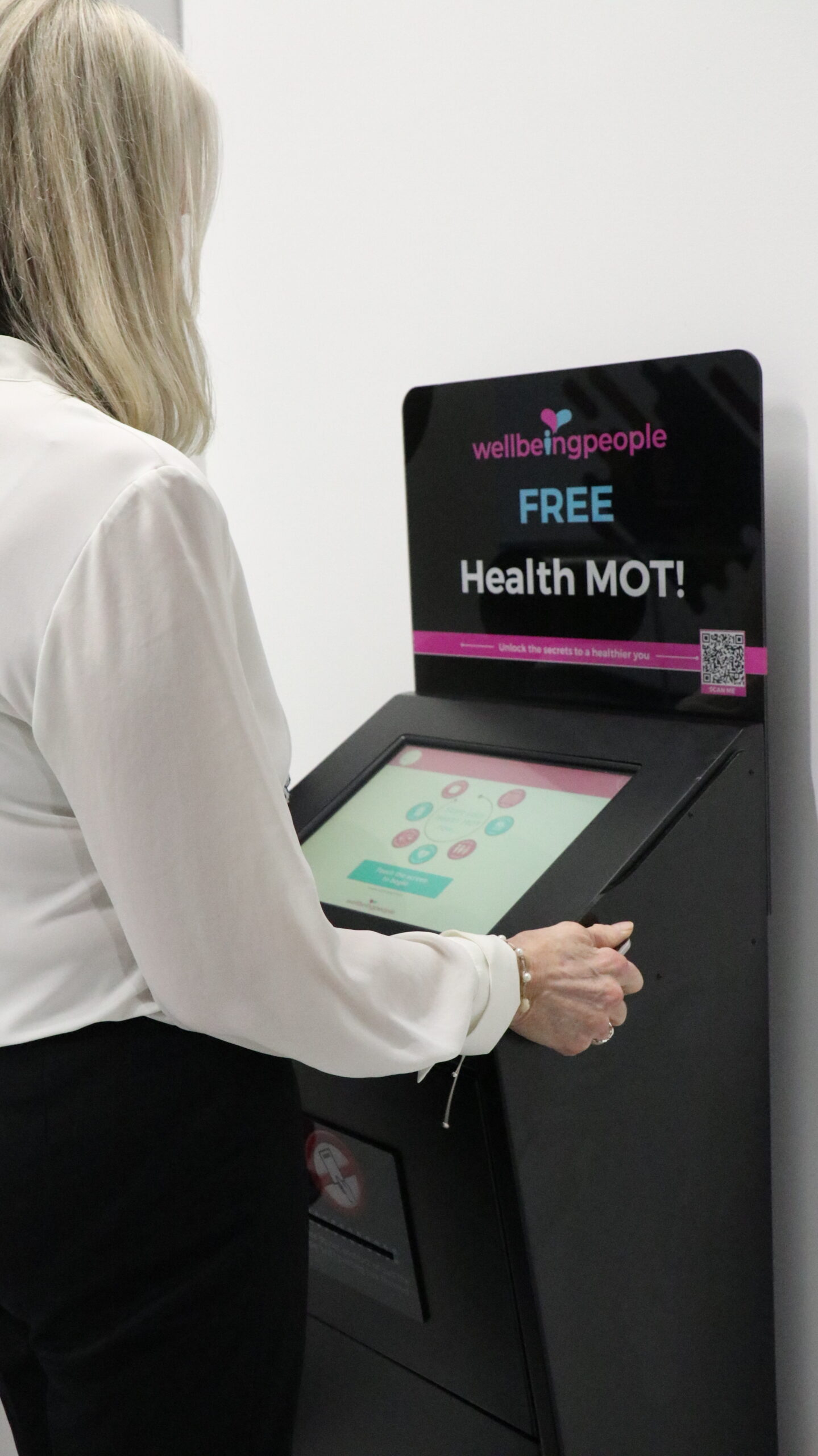
This is where tools like the Interactive Health Kiosk make a difference. In just eight minutes, employees can measure blood pressure, BMI, body fat, heart rate, and lifestyle factors like sleep and stress. They receive instant, confidential feedback, boosting personal engagement, while organisations receive anonymised, aggregated reports that reveal workforce trends.
When employees feel the programme is tailored to their needs (because the data shows exactly where the challenges lie), engagement rises. And when HR can show leadership hard evidence, such as 70% of employees reporting poor sleep or a high proportion with elevated blood pressure, it’s far easier to secure ongoing investment in wellbeing.
Real-World Engagement in Action
We recently worked with a UK manufacturer that deployed the Interactive Health Kiosk across its sites. Management expected around 40% staff participation. The actual result was almost 85% of employees engaged, completing their health check and receiving personal feedback.
This extraordinary uptake demonstrates the Engagement Equation in practice. By making health checks quick, personal, and data-driven, the company created a wellbeing buzz that captured employees’ attention and gave HR the insights needed to plan smarter initiatives for the following year.
Employee engagement and wellbeing are inseparable. Healthier employees mean fewer absences, stronger loyalty, higher productivity, and a culture where innovation can thrive.
The challenge for organisations is to move beyond surface-level perks and embed wellbeing as a core driver of engagement. By measuring what matters and acting on real insights, you can deliver results that benefit both employees and the business.
The Engagement Equation is simple, but powerful. When employees are healthier, the whole organisation wins.
1-Week Interactive Health Kiosk Pilot Programme
For organisations looking to boost engagement without committing to long-term or high-cost initiatives, the 1-Week Interactive Health Kiosk Programme is a powerful solution. For small businesses, it works as a complete wellbeing programme. For medium and large organisations, it’s the perfect pilot to test engagement before scaling
Frequently Asked Questions
Employee engagement and wellbeing go hand in hand. When staff feel supported physically and mentally, they are more motivated, loyal, and productive. Studies show that organisations prioritising wellbeing report better morale, reduced absence, and stronger performance.
Healthier employees take fewer sick days, have higher energy levels, and are more focused. This leads to better productivity, improved retention, and even greater innovation as employees bring more creativity and commitment to their roles.
Poor wellbeing is a major driver of turnover, with over 60% of UK employees citing mental health as a reason for leaving a job. By investing in wellbeing, organisations show they care, building loyalty and reducing costly staff turnover.
Data-driven wellbeing tools, like Interactive Health Kiosks, provide instant feedback for employees and anonymised insights for HR. This ensures initiatives are relevant, targeted, and more likely to engage the workforce effectively.
Workplace Wellbeing
Workplace Wellbeing
Workplace Wellbeing
References:
https://www.cipd.org/uk/knowledge/reports/health-well-being-work/
https://www.deloitte.com/uk/en/services/consulting/analysis/mental-health-and-employers-the-case-for-investment.html
https://pmc.ncbi.nlm.nih.gov/articles/PMC6832080/
Gympass, The State of Work-Life Wellness 2024, October 2023